An Important Book Review: A Short Course in Happiness after Loss by Maria Sirois

Maria Sirois
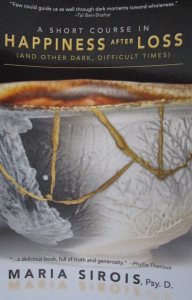
Maria Sirois is an elegant and graceful storyteller with a wealth of stories from her own life and work. In her new book, A Short Course in Happiness After Loss, she reminds us that loss is an inevitable part of life which none of us is spared. Through her writing about loss, and I mean the kind of loss involving abrupt change to the core of our being and the way we think life is or should be. Losses such as death, divorce, and illness. These are kinds of loss that alter our reality (and often instantly) where we are taken out of our day-to-day normal and brought into the depths of raw and consuming emotion. All of these losses involve grieving and require time to heal.

Maria leads us through the journey with full permission to be in all the mess and emotion for as long as it takes. She leads us on an upward spiral through grief, hope, courage and onto the possibility of happiness with baby steps of awareness to rise up and see life as it is — a co-existing of good and bad, of up and down, of messy and orderly, sadness and joy. Maria’s authentic and raw honesty goes right to the heart and opens the door to moving forward into a life of meaning and pleasure. She is not talking at us about loss. She leads us, through real experiences, onto the path to healing.

Slowly, with tenderness and respect, Maria shows us that happiness — a life of meaning and joy — is possible when we begin to notice what is good, what is beauty, and onto what can be a new normal with joy as well as loss.

I was reminded of the morning my mother died and I went for a hike in the woods to cry, to remember, and to be cradled in the arms of nature. It was there I found a robin’s egg, newly hatched. I saw that coexisting was the metaphor of the release of my mother from this life for which I felt enormous grief and a glimmer of beauty and life continuing on in spite of the empty well I felt knowing my mother was gone.

Yes! I highly recommend Maria’s book for everyone, since loss does not discriminate who will or won’t experience loss. We all will, at some point. This book is an important guide through loss to the other side. A great short course to be, perhaps, better prepared when loss finds itself into our life. If you are in the midst of loss and wanting to find your own way to a new normal, this book is a beacon to find your own courage, awareness, and bravery on your journey.

Living in Strength


Mountain Goat Utah

“Curious people pursue experiential novelty, variety, and challenge.”

I thought I would be writing about mindfulness in this post. However, what I am full with this morning are my strengths — love of learning and curiosity. So I am going with the flow and will write about mindfulness at another time.

I have spent too much time in my life in judgement and self-criticism around what I thought were my faults. I have worked hard to try to fix them with all the New Age approaches and therapies I could use — affirmations, visualizations, energy healing, journaling, and reading every self-help book I could lay my hands on. I also spent years in therapy through my 20’s and 30’s trying to understand and looking at my past as the focus of blame and trying to repair my faults. All of my efforts provided few lasting results. I still struggle with forgiveness and teamwork. Sound familiar?

Then, several years ago I found the Certificate in Positive Psychology course through The Whole Being Institute and offered at Kripalu. I became immersed in Positive Psychology which is grounded in the science of what is good and what is working in life. Rather than looking only at what needs fixing, Positive Psychology looks at successful, happy people and looks at what they do that makes a difference regardless of their past (or present circumstances). What a game changer this has been for me!

Note: if you want to shed light on your life and begin living from what is working, go to Whole Being Institute (www.wholebeinginstitute.com) and consider investing positively in yourself.

One area of Positive Psychology that has had a tremendous impact on my day-to-day life has been the study of strengths and learning to live more from my character strengths while nurturing some of the strengths that are not at the top of my being in the world.

Learning about virtues and strengths that are universal opened my eyes to a whole new world and a positive focus in my life as well as those I work with. Martin Seligman and Chris Peterson (two top psychologists in Positive Psychology research) wanted to know about the strengths that are inherent in people worldwide. Through their research and work, they found there were six virtues — wisdom, temperance, transcendence, courage, justice, and humanity — that are commonly valued across cultures. Within those six virtues are twenty-four strengths that are also commonly valued worldwide. They are: creativity, curiosity, open-mindedness, love of learning, perspective, bravery, persistence, integrity, vitality, love, kindness, social intelligence, teamwork, fairness, leadership, forgiveness, humility, prudence, self-regulation, appreciation of beauty and excellence, gratitude, hope, humor, and spirituality. These strengths exist in everyone to varying degrees. Seligman and Peterson found that everyone has strengths that are used more than others and that through questioning we can learn what strengths make up who we are as individuals (a personal blueprint of strengths) in our lives. Our top five to seven strengths are used most and are referred to as our character strengths or those that make up who we are in our day-to-day.

Note: Go to http://www.viacharacter.org to learn your personal ranking of the 24 strengths. There are, also, other organizations that offer strengths questionnaires for you to learn yours. A simple Google search will lead you to several.

When I took the VIA (Virtues in Action) questionnaire I saw my personal blueprint showing my ranking of the twenty four universal strengths. I had an ‘aha!’ moment! I was pleased and sat with a clearer understanding of who I am in my life to myself and others.Though my most used strengths were no surprise, they were a relief to know, and my understanding of myself expanded.

My character strengths (or my top 5 – 7) shed light on how I think, act, and present myself in my daily life. What was even more enlightening were the strengths, though present, that are not my most used. The two at the bottom of my list of twenty-four are the ones I’ve judged (and been judged for) myself for not expressing easily. I felt ‘off the hook’ for my life-long struggles to be different than I am and more like others.

Fun for me has been identifying when I am using my strengths, being mindful of using them in new ways (there, I am writing about mindfulness), and when I am spotting strengths in others. I am also learning to use my top strengths to nurture those strengths I use less, yet would like to use more.

“Teamwork is a strong sense of duty, works for the good of the group rather than for personal gain…”

Teamwork is not a top strength for me which explains why I work so much better being self-employed and in a solo healthcare practice. Now, I’ve been on many teams in my life (as an athlete in my youth, teamwork was important), however, teamwork isn’t something I often seek out now that I am older.

Last fall I was accepted to work as part of a team of teaching assistants for the current year-long course in Positive Psychology. I realized it as an opportunity to use the year to strengthen my skills of teamwork. I thought it would, at times, be a challenge to be communicating, working with and sharing responsibilities to guide a group of new students into and through a year of Positive Psychology study.

I must admit that there have been times in my adult life where I would not have even begun such a journey. There have also been times when I would excuse myself (yes, quit) to return to my solitary and comfortable way of being.

This time, however, my commitment is to continue and learn all I can while immersing myself fully in a team. My two top strengths — love of learning and curiosity — I am using to bolster teamwork in myself. I like to look at it as tethering my top strengths to one that I want to develop and master more. I am using my love of learning (learning all I can about myself and the team I am part of) and curiosity (my natural tendency to explore) to become a better team player.

What fun I am having!! I love the journey and am making new life-long friends in the process. I am even more passionate about Positive Psychology and working with others to extend the outreach of happiness in the world. I am appreciating my team and grateful for this opportunity (two of my other character strengths). I know I will continue to look for more teamwork possibilities in my life and will do it again and again!

I highly recommend you find out what your top/character strengths are and find ways to consciously live from them. I know you will be happier, healthier, and experience a more fulfilling life. For yours, go to http://www.viastrengths.org.

Smile, Look Up & Expand Your Body

PeaceBirch

These are three simple adjustments we can make anytime, anywhere, to change our mood, lift our spirits, inspire self-confidence, and communicate our strength and positivity. They are smile, look up (yes, that’s right, look up to the sky), and expand your body or as Amy Cuddy in her book, Presence, calls stand in a power pose (more from Amy Cuddy later).

  1. Look Up:

Looking up is a simple action with powerful results. If we are worrying, feeling blue, or stressing about something, our eye gaze tends to be down — anywhere below eye level. A simple adjustment to our mood is to look up. Lifting our eyes and head to look up changes our posture — we stand taller, open our chest & heart, breathe deeper, and feel lighter and more joyful.

I remember working with young children who were mostly from troubled families. They would come to Day Care each day with their feelings on their sleeves or in their fists. When they walked, they often looked down toward the ground. When someone approached them, they would startle or duck down. When sitting, they would wrap their arms around themselves as if protecting their hearts from harm. On walks or even indoors, I would have them look up toward the tree tops or the sky and tell me what they saw. This simple shift in their gaze lightened their mood almost immediately with laughter and open dialogue soon after.

This simple practice of looking up is something I do on all of my walks. If I am feeling down or out of sorts, I will walk outside and look up to the sky. I’ve known for many years that looking up changes my outlook, lifts my spirits, and I go about my day in a more positive frame of mind. I am even convinced that on long hikes or runs, when I look down at my feet I feel more pain in my body and when I look up, my pain diminishes and often releases entirely.

This has been my little secret awareness for many years until reading Amy Cuddy’s work on how we hold our bodies, I now know there have been studies done that support what I’ve known all along! When we change our posture to a powerful pose (expanding, looking up, and becoming bigger) rather than a powerless pose (folded in on ourselves, looking down, shoulders rounded) we benefit by feeling more self-confident, self-assured, less anxiety and depression, and less physical pain.

Looking up! How simple is that!

2. Smile:

Another simple practice I use is to smile. My Positive Psychology instructor, Tal Ben-Shahar, teaches that it isn’t just any smile, but an authentic smile which includes smiling with our eyes. We all know the fake smiles. We’ve seen them in photo’s of people who are told to smile for the camera but aren’t really feeling it — they are smiling only with their mouths. An authentic smile is one where we smile with our eyes as well as our mouths!

When you look at someone or a group of people and they are smiling or even laughing, what do you naturally do? Of course, you smile or laugh with them even if you don’t know what they are happy about! Laughter and smiles are contagious and they feel good because they communicate to the brain to release ‘feel good’ chemicals (hormones).
My first Qi Gong class always ended with the instructor saying, “Put a smile on your face and then open your eyes.” With a smile, I breathed deeper, stood taller, and moved onto the rest of my day in a more positive mood.

Research now shows that the posture we hold triggers our brain to release different hormones that match our posture. A simple act of changing our physical posture with a smile directs our feelings and our actions. When I wake in the morning, I stretch, pet my dog & cat, and put a smile on my face — all before getting out of bed. This daily ritual sets the tone for my day.

I challenge you to practice waking each morning and, before tossing back the covers, put a smile on your face first and then see how you feel and act. Imagine everyone in your family or circle of friends beginning the day with putting a smile on their face!

3. Expand Your Posture into One of Power:

Amy Cuddy, in her book, Presence, talks at length about how we carry ourselves — our posture. She says, “The way you carry yourself is a source of personal power – the kind of power that is the key to presence.” Her research and that of many others sited in her book, substantiate that expanding our body by standing taller, opening our chest, looking up, and arms open (not wrapped around ourselves) has many benefits. When we stand in a powerful pose we communicate presence, self-confidence, and self-assurance. We are more creative, courageous, generous, resilient, and open. In her words, “It doesn’t change who you are; it allows you to be who you are.”

When we stand or sit with our posture open, powerful, and head held high, we communicate and feel very differently than when we sit or stand in a powerless position with head bowed, arms wrapped around ourselves, and our shoulders rounded.

Try it. Walk around the room in a powerful, open posture. How do you feel? Then, change to a powerless posture and notice how you feel. When we stand in a more powerful way we feel happier, more optimistic, confident, and less stressed or anxious. We can more easily access positive memories and positive outlooks when we stand in a powerful way.

These are three simple practices that communicate to our brains to feel better by releasing positive hormones. I encourage you to try them out and then share them with those in your family and circle of friends. If everyone did that, we would find ourselves living in a better world with happier people!

Lastly, I highly recommend reading Presence by Amy Cuddy. She also has done research on the not so positive effects of technology (head bowed over a cell phone, texting, playing games, watching the news) and the posture that is being expressed worldwide…

What is Healing?

Version 2
Healing is so much more than getting rid of a disease or condition we are living with. True healing is finding a sense of well-being and peace within our lives as a whole — spiritual, emotional, mental, relational, and physical — and learning to live fully with or without a condition or disease.

I remember working in an AIDS clinic before the current cocktail of medications were available. At the time, AIDS was thought to be incurable, a certain death. Each day I saw a steady client list of both men and women, most of whom are no longer alive. It was in that clinic where I began to ask, “What is healing?”

These men and women were some of the most cheerful, loving, and kind people I’ve worked with. They were choosing to continue living, fully engaged. They told stories of places they’d been, family and friends they’d made peace with, and the parties and gatherings they attended or hosted. Each week, they would come for their acupuncture, herbs, and shiatsu. They continued to go to the gym or their yoga classes. They were generous with compliments, gifts, and lively conversation. They were always gracious, kind, and grateful. At first glance, no one would guess that they were living with an incurable disease.

In conversation with many of them, I learned that healing on the deepest level is an inner experience. Even though their disease wasn’t going away and their death was imminent, they healed on many other levels of living. It was through them that I learned the true meaning of healing as a state of being fully engaged and present in life. They taught me about reaching out to community, making amends, being grateful for another day, and keeping dreams alive as long as there is breath.

When we find ourselves challenged, finding a new normal is a first step. A new normal is one in which life continues to be a fulfilling journey with a chronic condition, disease, or even disability. I see a client who is disabled from an accident several years ago. He is severely limited in the use of the left side of his body. He comes to see me regularly and is eager to continue his healing journey with a team of practitioners that work toward continued healing. It is likely that he will never have full use of his arm and his leg may always need a brace to walk, yet he is on a healing journey and learning what a new normal looks like. He has said many times that he feels healthier than he has ever been in his life because of his disability. He talks about his lifestyle changes ranging from healthy food, regular exercise with a fitness specialist, massage, acupuncture, a positive attitude, and mindfulness as he learns to navigate his new way of being. He makes choices every day to view life as a positive experience. He now feels his disability is a source of strength and resilience.

In Oriental Medicine, I use the term right relationship as the goal for healing. The body is seen as a series of energy channels (meridians), each with its specific functions that help to maintain homeostasis. As we live life through the seasons, through our work, family, emotional and physical stresses, our body falls out of right relationship with one or more channels of energy falling out of balance with the others. Acupuncture, with its function of moving energy, and herbal formulas aim to re-calibrate and invite the meridians back into right relationship with each other. Once back in right relationship within, we feel better, more resilient, and we experience more energy. We can then better manage our particular challenges with a sense of being on course.

Our health and healing are much like flying an airplane or driving a vehicle. We are never totally on course, we make progress to our destination by making continuous corrections with the steering wheel until we reach our destination. So it is with our inner balance or right relationship. Living life pulls us in different directions, by making ongoing corrections in our self-care, practicing those activities that feed our well-being, and knowing that our health is a fluctuating experience we find our way.

We can be involved in deep healing right now, today. We don’t need to be sick or in pain to be healing. For today, we can begin to discover what healing is for us and be better prepared when challenges do arise.

As a healthcare practitioner with a passion for finding happiness, meaning, and purpose, I believe healing is an experience along a continuum of well-being and living life fully. My wish for myself and those I work with is that we all find healing now. I am committed to continuing to ask the questions, “What is healing?” and “How do you find your own healing, with or without a disease or chronic condition?”

Some practices that, for me are foundational for my own inner healing are gratitude, kindness, and appreciation. I, also, choose to live my life feeding my soul, my emotional self, and my physical self through exercise, meditation, and writing daily in a journal. I attempt to live fully engaged and doing those things that allow me to experience flow and aliveness. I nurture my relationships and reach out to community. I feed my intellect with ongoing learning and asking important questions. Consider which practices you could begin to do to encourage your own healing, even if your health is not currently challenged.

The Prepared Mind

Version 2
What is a Prepared Mind and Why is it Important?

None of us know what challenges are coming our way or when. What is certain is that they will come. In the past, I was a worrier (well, actually, I still do my fair share of worrying) and I thought that if I could imagine the worst case scenario’s around potential challenges or crises that I would always be prepared for the worst and be okay. Since studying Positive Psychology with the Whole Being Institute, I have changed my mind and my approach to being prepared for challenge. Now, I practice and surround myself with positivity and my life is filled with daily rituals that I know I can lean on in those crisis times. I do believe we can prepare ourselves in advance for whatever comes our way. I also believe that we may never be as prepared as we would hope to be. However, I am committed to practicing.

I work with many people on a daily basis that are in some state of crisis whether pain, sickness, or challenges that are affecting their well-being and their health. I help them with my tools of acupuncture, herbs, massage, and positive encouragement. When appropriate, I point out their strengths that I’ve listened to and witnessed as resources for their own resilience in the face of challenge. I also share practices they can use to nurture their well-being in other areas than the challenge they are navigating.

How do you prepare yourself? Or do you wait until the crisis arrives and figure out how to best approach a solution? As I said above, I believe in preparation. Those of you who know me, likely know that I have a passion for Positive Psychology, how it has changed my life, and the good it has to offer for living my best life. I use many of the proven principles in Positive Psychology as the core to my being prepared.

Positive Psychology, while acknowledging what needs to be changed, focuses on what is working and what is good in life. Having regular practices where we take the time to focus on the good and all the ways life is working leads to a resourceful foundation that shores up my cache of positivity in the face of the less than positive that is part of life.

Two of my core practices that help me navigate the abyss of fear and anxiety of challenge are mindfulness and gratitude.

Mindfulness practice or actively noticing, as Ellen Langer refers to mindfulness, is a practice I can do anytime. Through mindfulness, I focus on what is and what I am aware of in the moment. As a meditation practice, my focus may be my breath or relaxing areas of my body that are tense. Mindfulness helps me be more engaged in the present moment and calm. Jon Kabat Zinn has been a pioneer in using mindfulness meditation in hospitals and healthcare settings. What we know from research is that mindfulness practice lowers anxiety and depression as well as provides health benefits such as lower blood pressure, faster healing, a stronger immune system, and clearer mental functioning. We also know that the benefits mindfulness meditation last long beyond the time spent in meditation. Even 10 – 15 minutes a day has lasting benefit.
Gratitude is another practice that helps me to notice what is good and what is working in my life. Gratitude is a practice I have done daily for so long, it is now as much a part of my life as getting dressed in the morning. I finish every day with a list of what I am grateful for and I notice each thing on my list with a heartfelt sense of being grateful. No matter what the circumstances of any given day, there is always something to give thanks for.

Through these two practices, that are a core of my daily life, I find that I am better prepared and able to ride the waves of life’s challenges and crises.

There are many ways to prepare ourselves for what comes our way. Another readily available resource, that many of my clients use, is the internet. When we find ourselves faced with a diagnosis or health challenge, gathering information or knowledge can be a double edged sword, especially on the internet. The internet is an infinite wealth of information that everyone has access to — both useful information as well as less than useful information. Most of my clients come to see me well armed with information from diagnosis, symptoms, treatments (allopathic and complimentary) and the side affects of drugs they may have been prescribed. As one of their healthcare resources, I listen to the information and cull out what may be useful and what isn’t helpful as we discuss a plan of treatment.

I do believe knowledge is a good thing when it comes to understanding and navigating your plan for healing. I also believe there can be too much information that fuels fear, anxiety, depression, and a downward spiral that, instead of being useful, begins to worsen our experience, preventing healing from progressing or even beginning.

We need balance when facing a challenge or health crisis. I want both my daily positivity practices, that gather momentum for a healthy life, as well as information that will help me ask helpful questions of my healthcare providers in designing a healing plan that suits me.

All of this leads me to another question – an even bigger question – that I’ll address in a later post: “What is healing?”

For now, I’ll let you ponder your answers to this question and stay tuned for my thoughts and stories on healing. Have a lovely day!

Collecting Happy

I teach workshops focused on happiness and health in addition to my one-on-one work in healthcare. I love these workshops because I find joy in seeing people leave with a sense of hope and excitement having begun to explore and fill their buckets with practices they can continue doing to be happier in their lives at home and feel a greater sense of purpose.

At a recent workshop, one woman excitedly blurted out, “You are a happiness collector!” This was during a discussion on using micro-moments or happiness boosters throughout the day to change our mood. Happiness boosters are those things we can do in 5 – 10 minutes or less to lift our mood into an upward spiral and feel, even, one percent happier.

We co-created a list of happiness boosters from which everyone could make their own lists to take with them. Some of the activities on our group list were — dancing, music playlists, stretching, run around the outside of the house (or the inside), call someone we love, work on a jigsaw puzzle, play a game, take a quick walk outside, knit, crochet, fill the bird feeder, pick flowers, remember something fun or funny, eat chocolate, send a loving text to a friend, sing, read a poem out loud, or take a few deep breaths. Making those lists was uplifting for everyone, filled with laughter, and sparking lots of creative ideas. At the end, we each acknowledged how we felt happier and closer just making the list!

Later that night and since, as I reflect on the comment that I am a happiness collector, I find myself agreeing wholeheartedly. I do collect happy! I collect ideas and activities for plugging into happy or changing my mood whenever I’ve become too serious or noticing a downward spiral. And, I do them regularly throughout most days. I also share them with others through my work and with friends. We would all benefit by collecting happiness.

Sonja Lubymirsky, in her book ‘The Myths of Happiness’, writes about the higher value of experiences over things in raising our general sense of well-being and positivity. In her book, she talks at length about the myths of happiness which often involve things, trips, money, large purchases, and relationships which actually do little to raise our sustained level of well-being.

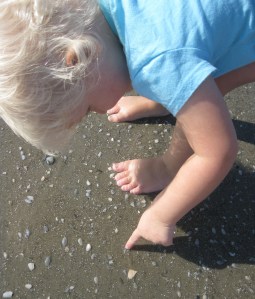
As a collector of happy, I am learning that I tend to look forward to experiences over things. For example, once a month, I go to visit my daughter, her husband, and my grandchildren. I look forward to the adventures of every weekend. Most visits, we enjoy simple experiences such as going for walks on the beach, nature walks, the local community zoo, or playing board games at home.Sophie blog photo 2016 Every visit I return home with memories that keep me smiling until my next visit.

Memories are wonderful happiness boosters. Most memories grow from experiences more than things. My fondest memories stay with me and become endless sources of joy as I look at photo’s, write about them, and share the stories with others. I also find joy in listening to the adventures of others through their stories. Most people love to tell stories of their experiences — where they were, who they were with, and what they were doing — as a way to keep the memory alive as well as to integrate experiences into our overall sense of well-being. Good memories are part of my collection of happiness boosters or ‘power ups!’ as Jane McGonigal calls them in her book & game, Super Better.

Why is it important to collect happiness boosters? Having a cache we can reach for throughout our day helps us become more resilient in the face of everyday challenges. Taking the time to insert a happiness booster into our day, lifts our mood, increases our positivity ratio, and makes our day much more positive! Research has also shown that micro-moments of positivity can do more for our overall long-term well-being than the large events we think will make us happy such as going on vacation or buying a new car. I can easily create micro-moments every day while going on vacation takes planning and time.

When we practice creating positive moments, acknowledge what is good or going well in our lives, and express gratitude for what we already have, especially the simple, we experience more sustained health, healing, even longevity. Recent research is showing that our happiness directly affects our health in positive ways from lower blood pressure, stronger immune systems, faster healing, and living longer.

Here are two simple happiness boosters you can try right now.

1. Laugh – think of something funny or something that made you laugh, let yourself laugh.

2. Take three deep breaths. Let your exhalation be twice as long as the inhalation. You might notice that your heartbeat speeds up a bit on the inhalation and slows down a bit on the exhalation. This change in heart rate is known as heart rate variability and is an indicator of our health.

Both of these happiness boosters positively affect our heart rate variability which improves the healthy functioning of our vagus nerve which directly affects the health of our internal organs and results in feeling better over-all. In fact, the health of our vagus nerve and our heart rate variability are measurements of our general level of health.

When I remember a joyful moment with my grandchildren from a recent visit, I feel more energized. Remembering our walk on the beach looking for nesting Snowy Owls, collecting sand dollars, or wondering where beach creatures go in winter, I feel less pain and am inspired to go for a walk here in the woods around my home, with a similar sense of wonder and exploration I have through the eyes of curious children.

My goal is to continue to ‘collect happy’ for my own well-being and to share my collections so you, too, can feel a lifted sense of positive well-being. I hope you will share your ideas of happiness boosters or power ups with me!