I just spent two weeks on a remarkable journey filled with so many heart opening, mind altering experiences it will take weeks to fully integrate — it will, perhaps, be my winter project.
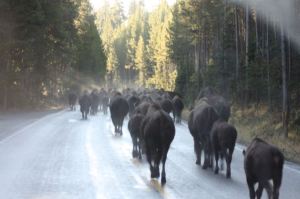
The first week of my journey was with my two sisters. We flew into Jackson Hole, Wyoming to be together, explore Yellowstone and the Grand Tetons. Once together with luggage stowed in the rental car, we drove to Yellowstone, the first part of our time together. I had been to Yellowstone many years ago for a day. Then, I thought Yellowstone was beautiful with endless pools of colorful boiling mud or sulphur laden pools and geysers – of course, Old Faithful. This time I learned that Yellowstone is so much more. The mountains, lakes, valleys, and wildlife were truly awe-inspiring. And to share it with my sisters, a blessing. We made endless stops to soak in the views, photograph wildlife, and, one morning, to make way for a herd of bison using the road before us. When an entire herd of large animals is filling your path, headed in your direction, there is little choice but to stop in awe and allow them to pass. They passed silently with a destination in mind which included the road as easy access.
My sisters and I? We laughed, we talked, we shared our meals together and found a familiar rhythm which made for easy travel companions – I so very much loved being with both of them. We are not often all together as we live different lives in different parts of the country. We’ve lived apart many more years than our brief childhood together yet the familiarity is still a soothing groove re-awakened within minutes at the airport.
I love seeing neuro-plasticity in action. Our familial grooves run deep and even though we are very different from one another, there is a common thread of those years shared in our youth. Decision making was easy — not like in our childhoods where we may have argued or forced our hand due to age. Aging has a way of smoothing and reprioritizing. On this trip we easily deferred each decision to whoever expressed the strongest desire. We had fun photographing sunrises, sunsets, wildlife, and each other. We enjoyed our meals in restaurants, our cabins, on the tailgate, or by the river. At Grand Teton we got to stretch our legs on some hiking trails since we all love to be outdoors in nature.
From there, I spent a quick day with my daughter and grandchildren before returning home to begin the second week of my adventure — an immersion week at Kripalu to complete a year long Positive Psychology course I’d been a Teaching Assistant for (to learn more about the certificate program, go to WBI.org). This journey was totally opposite to my previous week where nature and grand views prevailed. The connections and expansion took place, primarily, in one large room. The group of over 150 students, faculty, and our group of teaching assistants gathered together after months of virtual connection through video lectures, postings onto the course website, and many regular conference calls. Here we gathered from around the world to complete a year long journey by making connections, forming networks, sharing projects, and daily lectures — all in an environment of celebration for the learning, the growth, and the graduation before returning home to discover what’s next.
For myself, I forged new friendships, was in awe over projects, bonded with my fellow teaching assistants, and planned next steps to continue living and sharing Positive Psychology. I came away full with an open heart of gratitude for my own embodiment of meaningful and positive living as well as encouraged in the knowing that Positive Psychology is truly spreading — a happiness revolution, as Tal Ben Shahar calls it, is underway!
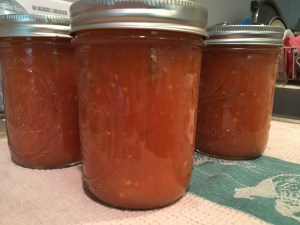
Yesterday I harvested tomatoes — a lot of tomatoes — and too many for me to eat before they spoil. So, I made tomato soup thinking I would freeze it for later. Once the soup was made and ladled into containers, I realized there wasn’t enough room left in my freezer from the fruit I’ve been picking and freezing all summer.
I decided that I would pull out my canning pot and preserve the soup in jars. Back at home after work, I prepared my kitchen for the canning process – cleaning the counters, washing jars, setting out my ladle, measuring cup, tongs, funnel, and water to boil in both the canning pot and a pot to sterilize the lids.
I don’t often think of myself as someone who pays a lot of attention to detail except when it comes to preparing food for canning. I am grateful to my mother for teaching me how to preserve food and, since she was exceptional at detail, I learned that each step of the way is important and makes the process easier.
Each summer into the fall, my favorite activity is to preserve whatever I harvest. The attention to detail makes me happy and becomes a meditation in motion for me. As I write this blog post while waiting for the full jars to process, I am aware of feeling very centered and calm like I do when I sit to meditate each evening. The detail of the canning process is so carved into my memory that each time I set about to put food by I move into a meditative state which can last for hours depending on how many jars are full and need to be processed.
I thought that this year there wouldn’t be time to do much canning. Now, I am excited to do more. I know that apples will be ripening soon which means I can prepare apple sauce and apple butter for those long winter nights when something that reminds me of summer helps to lighten the darkness. And, of course, my grandchildren love my applesauce.
I love knowing that I always have healthy food from the summer to open all year, especially when local vine or tree ripened fruits and vegetables are not available. I also love knowing that the food I’ve preserved has made me happy in the process and I do believe that happiness is in each jar when I open one months from now.
“Every year we have been witness to it: how the world descends
into a rich mash, in order that it may resume
…how the vivacity of what was is married
to the vitality of what will be?”
~ Mary Oliver
In Oriental Medicine, late August into September is considered a fifth
season — Late Summer. It is the beginning of my most productive time of year.
Summer is ending,
leaves are beginning to release from their branches with the gentlest of breezes, here and there some trees are changing from their summer green to colors of fall, and the fields full of growth begin to shrink (only two weeks ago, I could only see the ears of deer standing in the field and now I can see their heads as they wander and graze). Crickets fill the air with their sounds and geese overhead are beginning group flight practice for their winter migration south. This is a time of change into the darker days of fall and winter — and here, in New England, this season change tends to be more dramatic in color and temperature.
In years past, long before the convenience of grocery stores, this was a time of preserving the harvest and hoping there is enough to feed a family through the long winter months. As my canning pot boils I can already imagine my joy at opening a jar of applesauce in January or spreading blueberry jam on a piece of toast in February!
I find myself excited and tingly as I, too, consider my personal inner harvest and prepare myself for winter. I very much feel the sense of closure and new beginnings. I am about to finish a year of assisting in the Certificate in Positive Psychology course that I, myself, took only several years ago. As the course nears graduation, I find myself wondering how I will fill my time? And how I will say good-bye.
How appropriate that the course ends now, in late summer. This is the time of year when I am personally assessing, evaluating, and considering how I wish to move forward. I find myself asking, “Who am I?” and “Who am I becoming?” In my journals, I explore my answers and consider the choices stretched out ahead as new beginnings are close at hand. I am making my lists of projects, dreams, and plans with joyful anticipation.
For now, I am aware of being steeped in my strength of ‘Appreciation of Excellence and Beauty’ or awe. My morning meditations are outside, on my deck, so that I can be surrounded by the beauty of dragonflies, morning glories, sunflowers, wildlife, and the sunrise. Each meditation begins my day with a sense of awe and gratitude for the natural world I am a part of. What strength do you bring to this time of year? How do you prepare for the next season? What are you harvesting?
There are those days when I seem to wake up on the ‘wrong side of the bed.’ (My mother seemed to love that phrase, did your mother?) On these days, I find myself feeling uninspired, worried, not my most positive self, and simply down in the dumps. On these days, a concept that helps me through and back on track to my optimistic and positive nature, is giving myself permission to be human.
Permission to Be Human is a concept that I learned from Tal Ben Shahar in the Certificate in Positive Psychology training I took several years ago. It has been a guiding concept when I am not at my best for whatever reason. Yes, I am as human as everyone and remembering that with a Permission slip is something I use often (and also teach in all of my workshops).
This is one of the most useful ways I know to find my way to accepting being down or off my center. Without my permission slip, I can easily spiral downward visiting judgement, negativity, lack of inspiration, and, most importantly, self-judgement for wanting life to be different. Let’s face it life happens, events present themselves, and conversations unfold that can be challenging to rise above.
These last two weeks for me have been filled with frustration over a gnawing pain that has taken much effort to heal. Because the pain has been quite consuming, I have been off of my center. I find that I am more easily pulled into weariness, concerns over world current events (the negative kind), and return home from work ready to call it a day when there is still much to do.
Once I have taken the time to give myself Permission to be Human and begin to embrace whatever is pulling me into grumpiness, I can then begin the journey back to an upward spiral of healing and positivity. My personal journey has been focusing on self-care to relieve this nagging pain (oh, how I love massage, acupuncture, and chiropractic). As I continue feeling frustrated that it is taking longer than usual and rest seems to be most needed, I move onto letting go of my resistance to my feelings around my pain. Resistance is indeed futile!
Once I’ve given myself permission to be with what has my attention and letting go of my resistance, I can then move on to learning, being mindful, and listening to my body, my emotions, or my mental state. One of the ways I approach my frustrations is to consider asking different questions — questions that I would ask any of my coaching clients, acupuncture clients, or students — positive questions that lead me forward and upward.
Here are some of the questions I’ve asked: I pause and ask myself what do I need right now? How can I find a way to enjoy this time of pain? Is there anything I can I learn from this? What benefits can I notice right now?
The answers are readily there — I need my Permission to Be Human with my pain, frustration, lack of creative inspiration, and taking a ride on the downward spiral. This pain has forced me to take a rest from my beloved long hikes in the woods and trading them for shorter walks from home and gentle stretching on my mat. By taking the time to rest, I have the time to happily indulge myself in watching the Olympics (I can even imagine my own body moving with the athletes so I, too, benefit from their goals of personal best. I am certain that I benefit from the visualization and watching!).
I can also use this time to practice self-compassion — extending kindness toward myself. What a freeing and wonderful concept — extending compassion toward myself through kindness! I get to practice on myself what I do every day in my work with others. An added benefit is that I can then extend even more compassion toward those who come to me for their own healing from pain, imbalance, or disharmony with a greater understanding of their frustration, fears, and anxieties.
For now, I feel more in balance by taking the time to write out my process. I hope you will find this helpful the next time you are off your center or have gotten up ‘on the wrong side of the bed!’
“Games are not just a source of entertainment. They are a model for how to become the best version of ourselves.”
~ Super Better by Jane McGonigal
Our seaside cache!
My fondest memories of summer as a child were the games we played. Nearly every evening our neighborhood — children and adults — played Hide And Seek or Kick The Can. We would begin after dinner as the evening light began to wane and continue until it was too dark to see our own feet on the ground. I remember the fun, the laughter, and the sense of community. Games were an integral part of every day.
On our short street in rural Pennsylvania, everyone knew everyone else — we were a micro community. Because of the games we played, summertime became a long “endless summer.” During the daytime hours, all of us children would meet in one or another’s yard and make up games. When the weather was nice (which seemed to be most days) we all were outdoors from morning until bedtime with breaks only for meals or when our mothers called us in for help indoors. Back then, playing outdoors was simply what every child did and we wandered from yard to yard or into the cornfields beyond our yard. (We didn’t experience the fear that so many parents and children feel today.) The summertime was one long game from morning until night.
On rainy days, we had board games — Monopoly, Checkers, Candy Land, Scrabble — or card games, like Go Fish, and, of course, the family jigsaw puzzle always in progress. We didn’t have video games, iPads, computers, or apps for games. We also didn’t watch TV except briefly in the evenings. Games for us were physical and mental as well as opportunities for everyone to join in. We were close as siblings, as family, and as neighbors. The games we played were about connection, fun, and laughter.
As I reflect back on those games, I realize that they also taught us valuable skills for everyday life such as cooperation, concentration, perseverance, self-efficacy, setting goals, and resilience as in games there is, often, more failure than winning. We grew up using our natural strengths for happiness, health, and success because we practiced and used those strengths in the games we played.
Today, life is quite different. Few children (especially in urban areas) play outdoors unless supervised. Life is scheduled with structured activities and when not scheduled, too many children spend hours in front of the TV, their iPhones, iPads, or computers using Social Media and playing online games. Much of the disappearance of outdoor play is due to fear from the climate many children live in, I know. Yet, social media, TV, and online games aren’t necessarily learning and using valuable lifelong skills.
The good news (and there is always good news, if we look for it) is that games are making a comeback because who doesn’t like a good game whether old-fashioned fun or healthy competition between teams? How is this, you might ask? Children and adults can, indeed, be challenged with a good game that uses physical activity combined with technology for fun, cooperation, and connection. There is also growing scientific evidence backing the benefits of playing games — such as challenging us and improving our abilities both in and out of the game; increasing self-efficacy (the belief that you, yourself, can effect positive change in your own life); learning & nurturing greater resilience; increasing brain neuroplasticity; and increasing dopamine in the brain which is associated with faster learning and better performance. The science of games is quite interesting and, certainly, has encouraged me to play more games.
In just two weeks, I witnessed and participated in two games that combine technology and activity into the fun of game playing…
The first game I heard about and began seeing Tweets about is the new Pokemon GO. More on that in a moment…
The second game I learned about while out hiking, from a Dad with his two young children. The game they were playing is known as ‘Geocaching’ or a modern day, cooperative treasure hunt that uses a GPS to track a hidden cache. Totally intrigued, I asked them about geocaching since they were clearly excited and on a mission! Dad told me they were spending the day geocaching and there were four geocaches in the vicinity — the children excitedly showed me their small toys they’d retrieved from a previous cache.
On my return home, I googled ‘Geocache’ and was surprised at the number of results from a main Geocache website explaining all the rules and good practice guidelines as well as a number of YouTube videos on how to play and of adventures others had been on around the world. I Iearned that Geocaching began in 2000 to test GPS technology and quickly became a game played worldwide. Coincidentally, my daughter, son-in-law, and grandchildren were just introduced to a geocache near their home that was discovered by a neighbor and his children who are geocacher’s.
We registered with the Geocache website and planned our own adventure to find several in their area. We all went together (Mom, Dad, Gramma, and grandchildren) and had tremendous fun finding two out of three caches within miles of their home. We spent the day focused on a challenge, cooperating, being with and connecting with one another, and having fun with the added benefit of being outdoors in nature. My granddaughter who turned six that day, was ecstatic and has already been out to find more!
The second game, Pokemon GO, (I am sure you have already heard it mentioned somewhere) is a game that, within several weeks since being launched, is already popular in the US, Australia, New Zealand, and the UK (with more countries soon to follow). Pokemon GO is an easily downloadable app onto your Smartphone. And, yes, I have heard many negative judgements about the game and even more positives. My curiosity was intrigued because of the premise of the game — you must be outdoors and/or moving to play. There are also opportunities to play the game with others. Everywhere I go, I see people playing the game and having fun. I’ve talked to teenagers who are already experts. I’ve talked to a father and daughter who play together. I’ve also noticed an increasing amount of mentions on social media — it is certainly the new trend in games that goes above and beyond the sedentary nature of many video games, watching TV, or the focused attention online in front of a computer.
In my recent travels while standing in a line, I asked a woman in front of me (who was playing) if she would answer a few of my questions about the game. She was most interesting as she was also a grandmother, her excitement was contagious, she admitted to the addictive quality of playing, she plays along with her grandchildren, and she gave me a mini-tutorial on how to play. Her one comment was most intriguing, she said “For an introvert, I’ve met more people in two short weeks because of the game!” She told me that everywhere she goes she meets people — young and old — interacting and having fun! (I want to be like her — a cool grandmother!)
As I looked around the busy roadside rest area off the highway, I saw people connecting, having fun while being challenged and moving about — you simply cannot play Pokemon GO while sitting still! (Of course, I’ve been playing!)
Whether your interest is in a traditional game of Monopoly or Hide-and-Seek or you want to try something new and trendy with technology (I like both) — it’s good for our physical, mental, emotional, and social well-being. So let’s play more games!
Recently, I became aware of using my strength of “Awe” (Appreciation of Beauty and Excellence) in a novel way. I was tagged to participate in a seven-day Challenge on Nature Photography. I woke up the first morning and, each day for the seven days, began the day thinking what might be my photo for the day. I was stepping outdoors with an eye for the unusual yet everyday beauty. My excitement grew each day with beauty I could capture and share with others. I was noticing everything and photographing ordinary moments, then delighting in choosing one to post onto Social Media.
We all have strengths — our own configuration — that allows us to be individuals. In fact, there are a number of online sites you can visit and take their survey. My favorite is http://www.viacharacter.org.
VIA stands for ‘virtues in action’ and came about as a result of a group of scientists over a three year period who studied cultures around the world and found what was considered the six most important virtues and within them, the 24 strengths that all people possess to varying degrees.
A short questionnaire will compile your strengths profile with the top five or six being your character (or signature) strengths. These virtues, expressed through our strengths, are who we are in the world. By consciously and mindfully using our strengths in different ways or noticing when we are expressing them in our life, our lives become richer and more fun.
When I learned my profile of strengths, I wasn’t surprised by my top five because it is how I live in the world. What I am learning is that by intentionally expressing them, my life is more meaningful and rewarding. I’ve also learned to focus on strengths that I don’t use as often (or, initially thought I wasn’t good at) and find ways to creatively use them as well as notice them in others. Knowing my personal profile of strengths has become a set of lanterns in my life that I can more consciously use especially during challenging times.
A question I am asked often is, “Can I change my strengths profile?” Yes, you can. Though our top five or six tend to be somewhat consistent because they more closely align with who we are and how we live in the world. Why would you want to change those? I’ve taken the online questionnaire several times and find some strengths do move up the list or trade places with another strength. A friend of mine told me that the strength of ‘Love of Learning’ moved higher on her list when she returned to school. So, yes, our profile can change depending on what we are focusing on in our life.
A practice I like to do is to use a top strength to explore a strength less used in my life. For example, curiosity is a top strength for me while teamwork is not one I use often. When the opportunity came along for me to work with a team working on a common goal, I used my curiosity to explore me working with the team. It’s been a wonderful learning experience for me. I imagine if I were to re-visit the questionnaire, now, teamwork might be higher on my list because I’ve consciously focused on it as more a part of my life experience.
In my workshops, I teach virtues and strengths as a way to expand an understanding of who my students are as well as acknowledging what they are good at in their day-to-day. We are often, quite honestly, too focused on what may not be a top strength. Many us look to what’s wrong and ignore what is good which leads to dissatisfaction and unhappiness. When we look to what we are good at and what our natural strengths are, life becomes more satisfying and fun.
Using my strength of awe in my 7-day photo challenge was most rewarding as each day I could offer beauty and joy in a time of conflict around the world. What strength can you use to expand your life and those around you?
Every Spring I replace my bird feeders with birdhouses around my yard. Once the birdhouses are hung, I look forward to who will create their home for the summer. Most often it is the House Wrens and Chickadee’s who set up residence — this year was no different. Just days after hanging the birdhouses, a pair of House Wrens were the first to arrive and claim their home.
Every day for the next six weeks or so, I delighted in watching them. They began by cleaning house. Bit by bit, twig by twig, they dismantle last years nest until their home is empty and clean — ready to move in.
They begin to build a new nest bit by bit and twig by twig. I watched them flying to the birdhouse with twigs to place inside then fly off again to gather more. They brought twigs, feathers, and even some of the dog hair I left around the yard from my dog brushing. This construction goes on for several days from early morning until the last light of day. Their industrious work ethic and perseverance is awe inspiring! They reminded me of growing up in Pennsylvania farmland and watching farmers as they prepared their fields each Spring working from early morning until nightfall.
Then one day, all is quiet. The pair of wrens take turns in the birdhouse. I know their eggs have been laid and it is time to rest and wait. Just like the farmer’s after they’ve planted seeds in neat rows — they must water and wait.
This year, the wrens built their nest in such a way that the opening was partially blocked so I couldn’t peek inside to see their eggs (my curiosity gets the best of me, for sure). So, I too, needed to wait, listen, and watch until one day in early June the wrens chatter picked up in intensity. One would sing loudly while sitting on top of the birdhouse or on a nearby branch as the other would fly back and forth with food in its mouth to deliver into the nest. They would take turns with one always nearby singing or chattering in alarm while the other flew off and returned with food. The babies had hatched from their eggs and were hungry. Once again, I watched in awe at how devoted and watchful the parents were as they cared for their young.
After several days I began to hear the babies when food was delivered. I could easily imagine mouths wide open to receive the food. I felt a part of the family of nature and began to keep a more watchful eye on the activity in and out of the birdhouse. Each day I sat outdoors longer to witness how the mama and papa wrens took care of their young. Just as when they were building their nest, I was in awe at how they worked from early morning until nighttime steadily bringing food to their babies! They were such attentive and responsible parents spending hours flying back and forth with food. The would even clean the nest of bird droppings throughout the day.
As the babies grew their chirping became louder and I smiled at their tenacity. Then one day, I could see their heads reaching above the barrier and I wondered how long it would be before the parents job was finished.
Nearly two weeks later, I returned from a walk to see Mama wren feeding two wide open mouths at the opening of the birdhouse. As she flew away, their heads poked out of the opening — their curiosity led them to look around cautiously before retreating behind the barrier as I approached for a closer look. Each time I would take a step closer, one of the parents (always nearby) began a loud cry of alarm and the babies quickly retreated.
This dance continued for several days until, one day, I noticed the parents were nowhere in sight most of the day. They weren’t delivering food every few minutes. In fact, they weren’t delivering food at all. The babies cried louder as the day wore on and every few minutes one would poke out of the opening and then retreat. The next day I woke to see that the parents had returned. The activity around the birdhouse had changed. The parents each sat on nearby branches and sang (encouraging their young to be brave?) while the babies would emerge to look around and sing in return. Somewhere in the middle of the morning (while I was busy inside, of course) everything grew ‘loudly’ quiet. I went outside and the birdhouse was empty. The babies had found their courage and left their nest to fly on their own into their new life. They had found their wings of independence!
I know it is time to head into the woods when I wake up thinking about being surrounded by nature and those thoughts stay with me through my work day. Yesterday was one of those days. So when my workday ended, I did just that. I headed outdoors for a hike in the woods with my water, walking stick, camera, and a notebook as I always do.
When I go into the woods, I go to clear my mind, talk to God (or myself, the animals, and the spirit world all around me), and to be surprised by what wildlife I see. I also go to move my body which I know is my personal calming and healing medicine. Yesterday, I was blessed with a cloudless deep blue sky, high near 80 degrees, and a gentle breeze – the perfect day to take a long walk.
After the first mile, I knew I’d made the right decision. My senses were alert with the aliveness of the woods. I was in awe at how much green there was, even though it had only been two days since my last hike. The view through the woods is now filled in with the fullness of leaves on the trees and undergrowth. My sense of smell sharpened as everywhere along the edges of openings, berry bushes are in full bloom so every few steps their sweet fragrance promises a great berry harvest in August. Mingling with the fragrant blossoms, the smell of the earth reminded me with each step how much I am part of this natural and wild world. Listening to the birds overhead and chipmunks scurrying along as the dominant sounds along with my own breath and footfall as I walked uphill. A special treat was noticing a Luna Moth gracefully flying overhead — a rare and breathtaking sight!
The first mile is always the most challenging. My legs, breath, and body work hard before gradually settling into a rhythm. More importantly my mental chatter begins to slow down from my workday self-talk of to do lists, questions, worries, and concerns. Each step feels as though I am unraveling those thoughts and setting them along the path. With delight I begin to notice what is around me such as the huge mushrooms growing on a nearby tree trunk, a hawk flying from branch to branch just above me, or a turkey stepping through the woods. Wonder fills me.
I like to spend the first mile or two finding my rhythm as my legs warm into the movement and my senses open to beauty. Though sometimes painful on a steep uphill, I savor the transition from an active mind to an active physical experience. When I reach the top of the first long hill I already feel lighter, freer, and calmer. For a short while I slow my pace, allowing my cells to open even more to the magnificence of what surrounds me.
I continue one step in front of the other until I reach the point where I feel it is time to turn back toward home or (if it’s a day off) keep going to walk a while on the Appalachian Trail on the long loop that also takes me home. Once home, I relish my quiet mind and my body buzzing from the longer-than-usual hike. I am now ready to do what’s next — feed my animals, water my garden, and make dinner.
Hiking in the woods is my regular and drug free anti-depressant. A mountain of research supports my choice — people who exercise more and spend time outdoors experience less anxiety and depression. Both the physical movement and the Vitamin D our body produces from exposure to sunlight are prescriptions for greater happiness and calm. Of course, there are also the physical benefits of improved fitness, a stronger immune system, lower risk of heart disease, lower blood pressure, and weight loss. When we exercise regularly, we often make healthier food choices to support feeling good.
For me, the calm, the mental clarity, the meditation in motion walk, feeling aligned with the natural world, and gratitude for being a part of it all are enough to keep me putting on my hiking shoes as often as possible.
Here is a follow up from my Canine Massage workshops at Camp Unleashed over Memorial Day weekend — which is very exciting, I might add! So please keep reading!
Let me begin by saying that Saturday night was HOT, the room was even hotter and there wasn’t a breath of air moving! The people were uncomfortable and the dogs were panting endlessly from the heat — I walked around the room giving the dogs pieces of ice, which they were grateful for. On the second night, Sunday, the temperatures were more bearable as it had rained earlier in the day.
I’ve been teaching these canine massage workshops for more than ten years. Each one is different — many of the people are now regular attendees of Camp Unleashed and always with new faces wanting a weekend devoted to everything dog. For our canine massage workshops, we set guidelines — when the workshop begins the door is closed and everyone is asked to remain in the room until the end of the workshop. We set up these guidelines because a room full of dogs become alert, bark, and the calm in the room is disrupted whenever someone enters or leaves the room during the workshop. At least, that’s how it’s always been until now.
This weekend, I added a new element to the class — eye contact with our dogs and teaching about how oxytocin (known as the cuddle hormone) works in our bodies and contributes to both our health and leads to a calm-and-connect response in both people and our animals. I’ve taught about the role of oxytocin before in much less depth. This time I drew from the work of Barbara Fredrickson, in her book ‘Love 2.0’., where she talks about the importance of eye contact in releasing oxytocin and creating Positive Resonance in each person as eye contact is held. She also presents the science that supports creating micro-moments of love throughout our day when we experience Positive Resonance through eye contact. Her work is important and foundational in the science of Positive Psychology and positive emotions (any of you who know me, know that I am committed to the study and practice of Positive Psychology).
I was excited to present this new material in the workshop even though I was a bit uncertain of the outcome since much of the research is between people and other people or animals and other animals. I was taking a leap to do the exercise between people and their dogs. Now that the weekend is finished, I am even more excited that I presented the eye contact practice and the oxytocin connection that led to the calm-and-connect response.
This was the first weekend, in years, that people needed to leave during the workshop because of the heat. Here is the important observation: It was also the first weekend that when people and their dog needed to leave, the room didn’t go ‘crazy’ with excited dogs becoming alert, barking, and disrupting the calm in the room created by learning and doing massage!
I believe it is because of the eye contact we practiced with our dogs at the beginning of the workshop and returned to it throughout the massage. Through the eye contact, oxytocin was released in both the dogs and their people which led to a calm-and-connect response in the room. I felt myself participating in a love fest being witness to a strengthened bond between people and their dogs! Because of the calm-and-connect atmosphere, when someone needed to leave, the dogs did not need to become excited into a stress response that is closer to the fight-or-flight response we are all familiar with.
I was amazed at the difference in the room! Because I led the workshop both Saturday and Sunday night, I was even more convinced when I witnessed the same calm-and-connect atmosphere in the room when someone needed to leave then as well.
Of course, now I wish I had another canine massage workshop to lead this weekend. I’ll need to wait until the end of the summer to try it again. And, I will do it again! In the meantime, I am taking the time to make eye contact with my own dog (and cat) and loving the experience of our positive resonance. I’d love to hear your thoughts as you might be inspired to try out this exercise with your own animals.
This weekend I get to do something I love doing and look forward to every May and August! I go to Camp Unleashed right here in Becket, MA. Yes, Camp Unleashed is all about dogs and their people. For three days, people come out to a YMCA camp in the woods of Becket with their dogs and do everything involving their dogs. They play, learn, swim, hike, and deepen their bonds.
What do I do? I get to lead Canine Massage workshops in the evenings — teaching and leading people in how to massage their dogs for health, healing, and being better advocates for their dogs by being the first to notice when something changes or goes wrong – conditions like arthritis (joint pain), injury, growths, and ticks which can lead to Lyme disease and other tick borne diseases (and yes, tick borne diseases are as unpleasant for dogs as they are for people). Both evenings are fun and relaxing for everyone!
Why am I writing about this? Canine Massage is an evening about being happy and healthy for both the dogs and their people! Many of us know the benefits of receiving massage. Our health improves through the skilled and healing touch of massage in many ways such as needed relaxation, improved circulation, lowered blood pressure, reduced stress hormones, and healing from strain or injury. For dogs, the benefits are the same when they receive massage. Massage calms them when they need calming such as after a long hike or when they are nervous before or during a storm. Massage can be done to energize them when they are getting ready for agility and/or show events so they are at their best. Massage improves healing times, increases circulation, lowers stress hormones, and increases the bonds we have with our canine companions.
Another important benefit of massage is the increase of oxytocin in both ourselves and our dogs — especially when we also include eye contact. Oxytocin is the hormone that not only leaves us feeling good, it also decreases cortisol (the stress hormone) which strengthens our immune system and our health. Oxytocin’s effects go even further — it plays an important role in social bonding and attachment while building trust. Also, when we increase our levels of oxytocin, we are more likely to experience a calm-and-connect response which aids in our feeling good and receiving all the benefits of massage — isn’t that something we’d all rather experience?
If you have a dog in your household, consider taking a few minutes to give some calming massage. It’s easy to do, fun, and you will both feel calmer and healthier.
If you don’t have a dog, no worries! You can massage your cat. You can also share massage with all the members of your family. We all deserve more oxytocin and the healing that comes from even a few minutes of a shoulder or foot massage.

 Yesterday I harvested tomatoes — a lot of tomatoes — and too many for me to eat before they spoil. So, I made tomato soup thinking I would freeze it for later. Once the soup was made and ladled into containers, I realized there wasn’t enough room left in my freezer from the fruit I’ve been picking and freezing all summer.
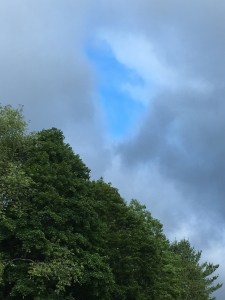
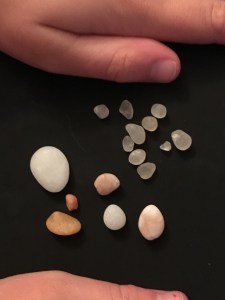
 Recently, I became aware of using my strength of “Awe” (Appreciation of Beauty and Excellence) in a novel way. I was tagged to participate in a seven-day Challenge on Nature Photography. I woke up the first morning and, each day for the seven days, began the day thinking what might be my photo for the day. I was stepping outdoors with an eye for the unusual yet everyday beauty. My excitement grew each day with beauty I could capture and share with others. I was noticing everything and photographing ordinary moments, then delighting in choosing one to post onto Social Media.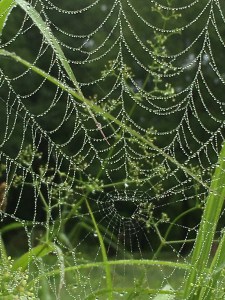

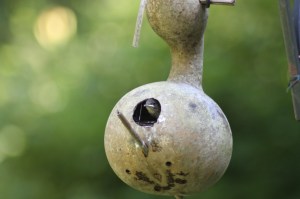 Every Spring I replace my bird feeders with birdhouses around my yard. Once the birdhouses are hung, I look forward to who will create their home for the summer. Most often it is the House Wrens and Chickadee’s who set up residence — this year was no different. Just days after hanging the birdhouses, a pair of House Wrens were the first to arrive and claim their home.
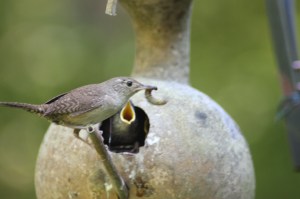 Nearly two weeks later, I returned from a walk to see Mama wren feeding two wide open mouths at the opening of the birdhouse. As she flew away, their heads poked out of the opening — their curiosity led them to look around cautiously before retreating behind the barrier as I approached for a closer look. Each time I would take a step closer, one of the parents (always nearby) began a loud cry of alarm and the babies quickly retreated.

 Happy, Healthy, & The Prepared Mind